Faith leaders are credible, influential and trustworthy and therefore serve as a great resource within communities. They have a critical role to play in maternal health advocacy. Religious beliefs and deeply rooted socio-cultural norms often act as a primary barrier preventing women from seeking lifesaving healthcare, accessing antenatal care and utilizing skilled birth facilities. Religious leaders are critical resources of influence in the community because congregants respect and honor their voices.
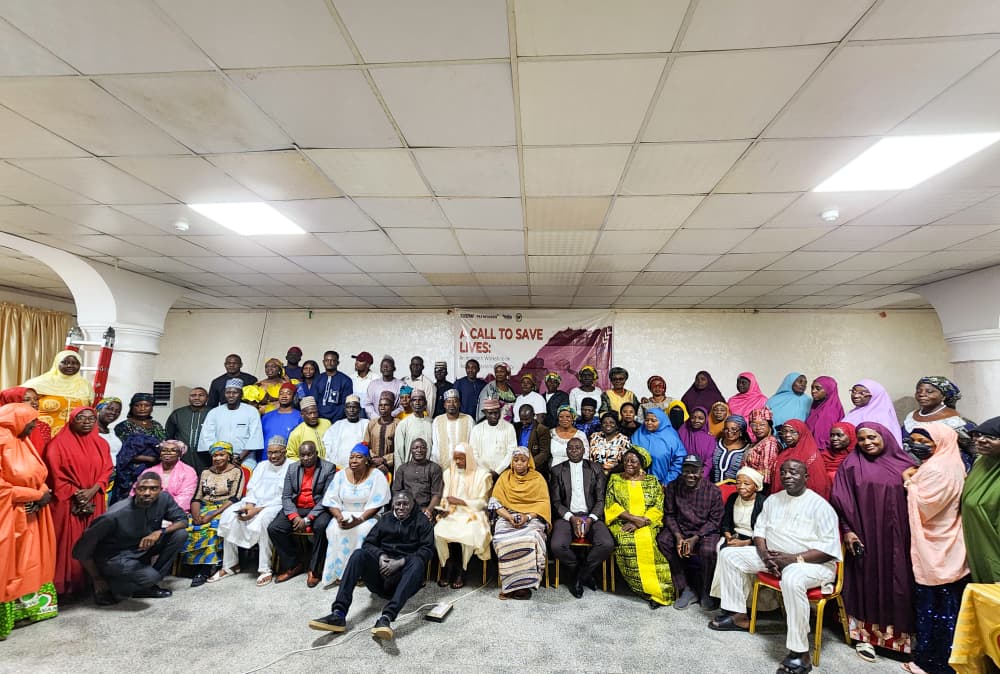
On the 19th and 20th of February 2026, in the city of Kaduna, Northwestern Nigeria, consortium partners Africa Center of Excellence for Population Health and Policy (ACEPHAP), Centre for Communication and Social Impact (CCSI), Pathfinder International, Medical Women’s Association of Nigeria (MWAN), collaborated with faith leaders to enhance maternal health and reduce maternal mortality.
A training was conducted for 60 religious leaders of the interfaith community drawn uniformly from Christian Association of Nigeria (CAN), Jama’atu Nasril Islam (JNI), Women Wing of the Christian Association of Nigeria (WOWICAN), and Federation of Muslim Women’s Associations in Nigeria (FOMWAN). In attendance also were the AIMMNCNH champions who comprise individuals that cut across different cadres who can make a difference in policy at different levels. They include academia, traditional, community leaders, religious leaders, media personnel, key government representatives, Youth and Maternal Newborn Health state officers and health personnel. Among the champions, there were media professionals who ensured that the voices of religious leaders were amplified as they contributed to reducing maternal mortality in Kaduna State.
The goal of the training was to leverage interfaith collaboration and community engagement which would contribute to reducing maternal mortality that can be achieved through interconnected outcomes:
- Increasing access to antenatal care
- Increasing the rate of skilled birth deliveries
- Directly addressing religious barriers to healthcare- seeking behaviours.
During plenary, some clerics and religious leaders narrated emotionally moving and touching stories of their experiences with maternal mortality. There was also success stories shared in plenary and during group work which points to the fact that all hands must be on deck in tackling and reducing maternal mortality. Open discussions highlighted deeply rooted socio-cultural barriers, and the need to facilitate an environment primed for improved behaviour change, leading to fundamentally better health outcomes.
The training was delivered using adult learning techniques through presentations, plenary discussions, and group work within which draft sermon guide were reviewed and co-created for the Christian and Muslim faiths.
Media professionals embedded directly among the champions ensured that media houses amplified these new advocacy voices. This strategic inclusion ensured that the urgent messages and shifting mindsets of the religious leaders were immediately broadcast and amplified, scaling their influence across Kaduna State to maximize the reduction of maternal mortality.
At the end of the interfaith training, the religious leaders and champions pledged and made a solemn commitment to act fast and save lives as they contribute to bringing down maternal mortality in Kaduna State. The religious leaders did not just leave the training with information, they left with a unified commitment, and burning desire to act fast and intervene directly within their spheres of influence, dedicating their platforms to bring down maternal mortality in Kaduna state.
Immediate accountability mechanisms and next steps to drive the next phase of deployment include the establishment of a dedicated WhatsApp group to continuously track, follow up, and report on commitments made during the workshop. And to finalize the co-created sermon guide in partnership with the AIMMNCNH consortium.
This engagement is a step in the right direction. As partnering with religious leaders and actively engaging them, the AIMMNCNH consortium has secured the most vital resource in public health: profound community trust. With this in place, a foundation has been laid to sustainably reduce maternal mortality in Kaduna state.