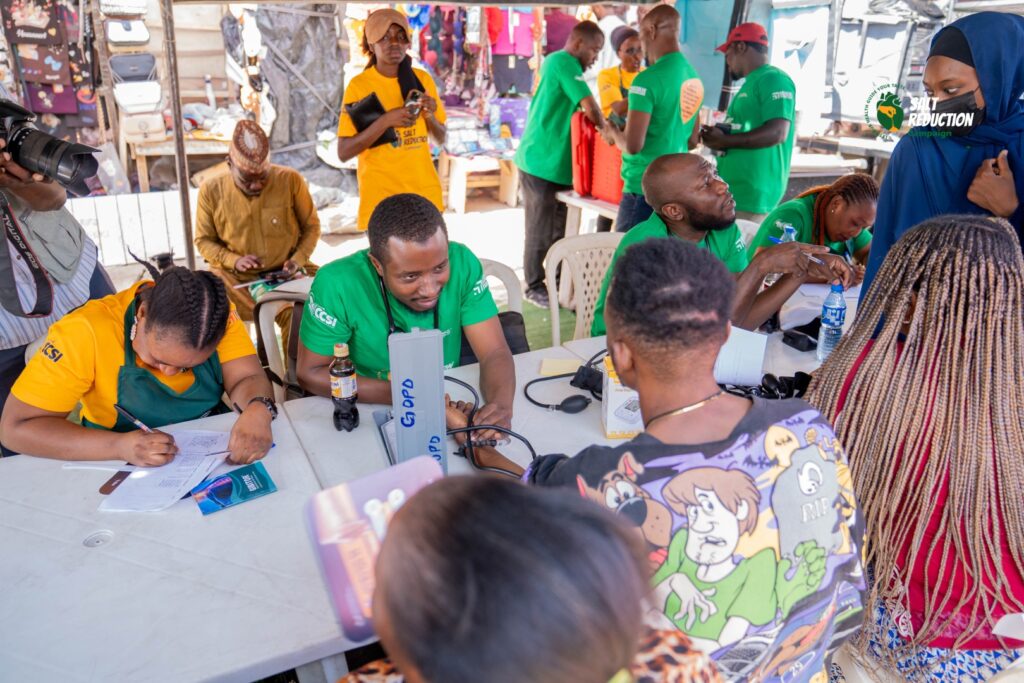
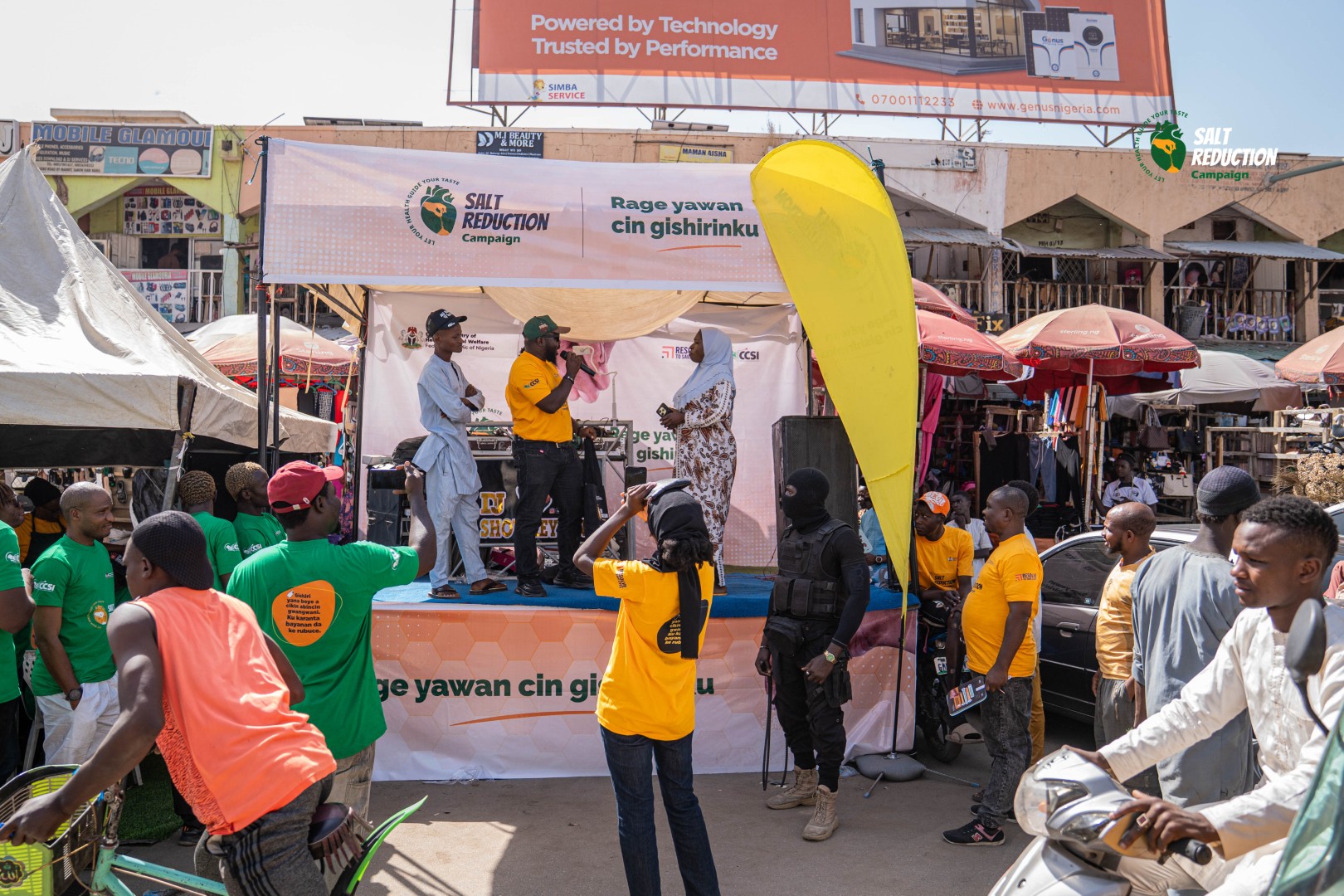
In the bustling cities of Kano and Lagos, a vibrant public awareness campaign was held to highlight the need to reduce salt consumption. The activity, known as a market storm, is part of the ongoing Sodium Reduction Campaign aimed at raising awareness about the health risks linked to excessive salt intake and encouraging healthier food choices at home and beyond.
Excessive salt consumption is a major contributor to high blood pressure and cardiovascular diseases. According to the World Health Organization, nearly 1.9 million deaths globally each year are linked to consuming too much sodium.
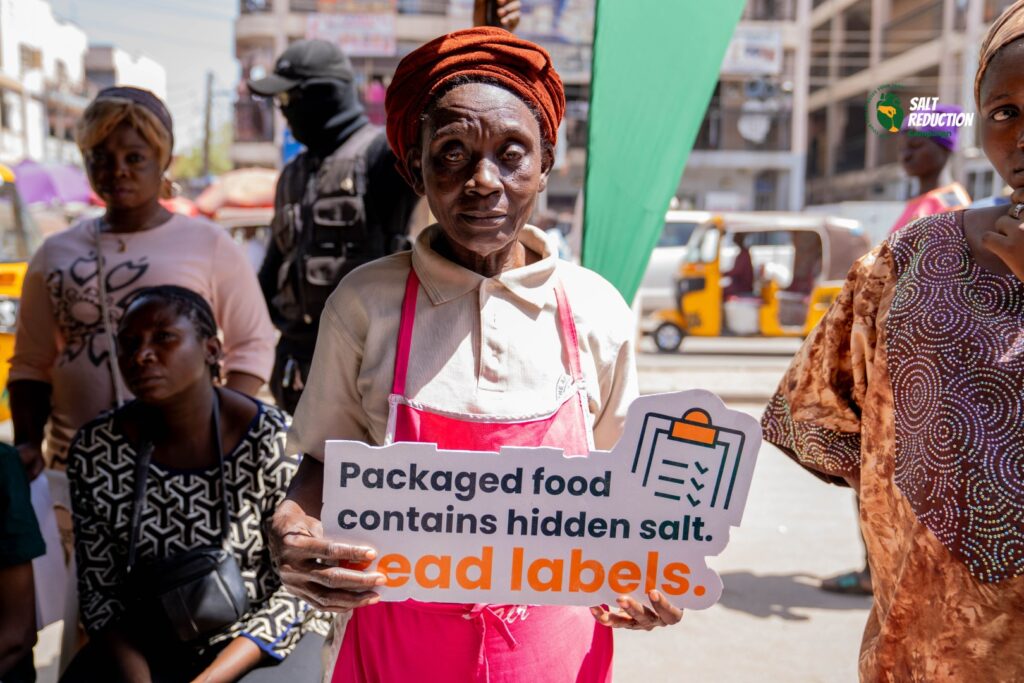
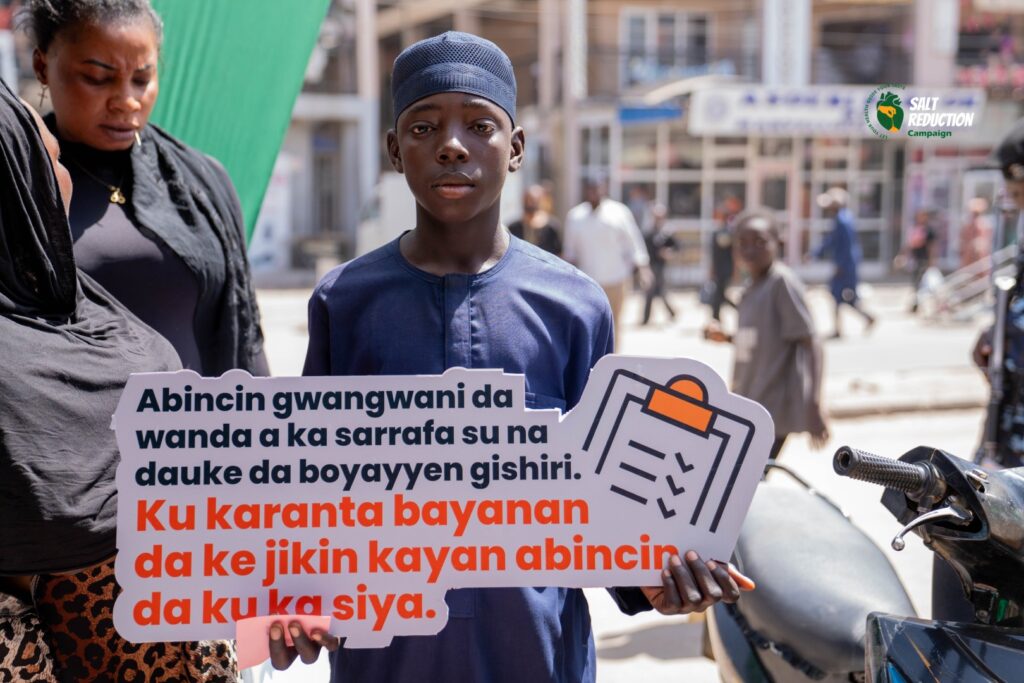
On February 12 and 18, 2026, the Centre for Communication and Social Impact (CCSI) organized sodium reduction market storms in Sabon Gari Market in Kano and Balogun Market in Lagos. These activities built on the earlier market storm held in Abuja in December 2025. However, this round introduced expanded campaign messaging with about five different inscriptions displayed on campaign shirts, photo props, and aprons.
To make the messages more inclusive and relatable, campaign materials were produced not only in English but also in the dominant local languages. Key messages were translated into Hausa in Kano and Yoruba in Lagos to ensure that traders, shoppers, and other market users clearly understood the information being shared.
The campaign focused on raising awareness about salt consumption from three major sources: foods cooked at home, foods eaten outside the home, and packaged foods. Women who sell food, everyday grocery shoppers, and the general market population formed the primary audience for the engagement.
The outreach recorded about 225 direct participants in Kano and more than 300 direct participants in Lagos. Beyond those directly engaged, the campaign also reached many people indirectly due to the high foot traffic and central locations within the markets.
A key component of the campaign was a health outreach where doctors and nurses conducted basic health checks for traders and shoppers. Many participants had their blood pressure measured, and several individuals were found to have high blood pressure without knowing their health status. The health workers provided advice and referrals where necessary.
In addition to one-on-one consultations, doctors and campaign leads delivered short health talks on the dangers of excessive salt consumption. Demonstrations were also conducted to show the recommended daily salt intake using the one-level teaspoon guideline. Participants were introduced to healthier cooking practices, including the use of natural spices as alternatives to excess salt.
Photographs and short video clips were captured during the activities and later shared across digital platforms to extend the reach of the campaign messages beyond the markets.
The campaign also attracted strong media attention. Journalists from several media outlets covered the activities, helping amplify the messages to a wider audience. In Kano, coverage came from NTA Kano, Arewa Radio, Daily Trust, Vanguard, and ARTV. In Lagos, media houses present included the News Agency of Nigeria (NAN), Trust TV, Bond FM, Vanguard, and BusinessDay.
The importance of these market storms cannot be overstated. They represent a true grassroots approach to public health awareness, taking vital information directly to everyday Nigerians who make daily food choices for themselves and their families. Among the different strategies used in the Sodium Reduction Campaign, this approach has proven to be one of the most engaging and impactful. Reaching people where they live, work, and shop ensures that the message is not only heard but also understood and applied in daily life.
The Sodium Reduction Campaign is driven by the Federal Ministry of Health and Social Welfare with support from the Centre for Communication and Social Impact and Resolve to Save Lives. Together, the partners continue to work towards reducing excessive sodium consumption and improving the health outcomes of Nigerians.