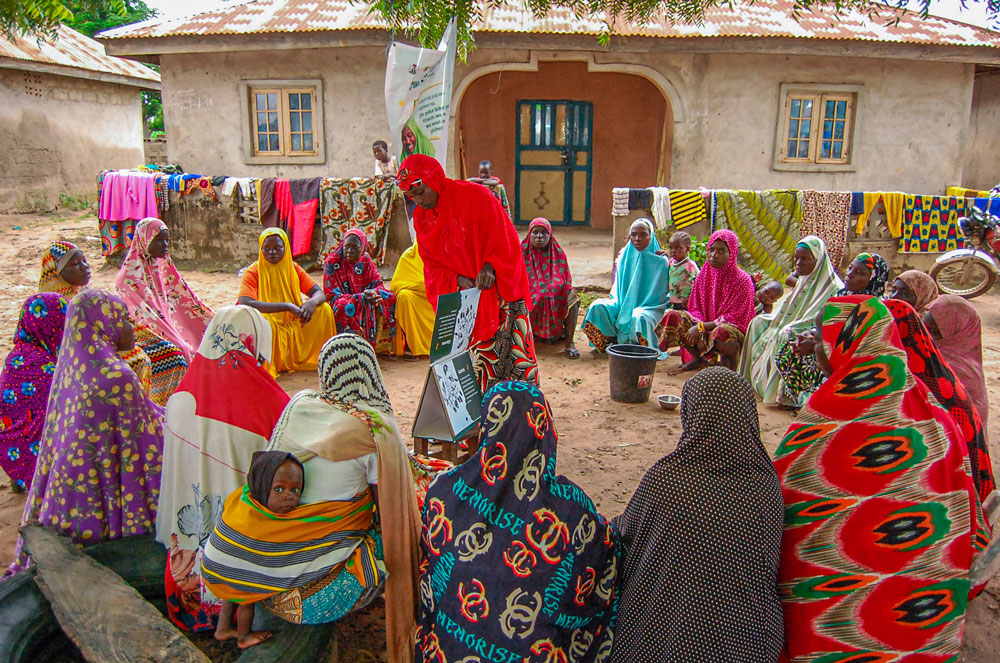
For many women, belonging to a community group is about more than meeting regularly or participating in an economic activity. It can mean having a safe space to learn, share experiences, ask questions, support one another, and discover the confidence to make decisions that affect their lives and families.
This is one of the significant ways the Nigeria for Women Project (NFWP) has created impact through its Women Affinity Groups (WAGs).
A partnership between the Federal Government of Nigeria, World Bank and the Centre for Communication and Social Impact (CCSI), NFWP was designed to improve the social and economic well-being of women in targeted communities. Over the years, the project has established thousands of WAGs, creating a platform through which women can access livelihood support, build skills and strengthen their social and economic agency. By December 2023, the project had reached more than one million community members and established 22,094 WAGs, reaching 458,181 women beneficiaries across its six original states.
But the strength of these groups goes beyond the numbers.
Over time, the WAGs have evolved into platforms for continuous learning and community engagement. The project has increasingly layered different thematic areas onto these existing structures, recognizing that women’s economic empowerment cannot be separated from the social and environmental realities that shape their lives. Health, gender, gender-based violence (GBV), Water, Sanitation and Hygiene (WASH), and climate change adaptation are among the areas introduced through this approach.
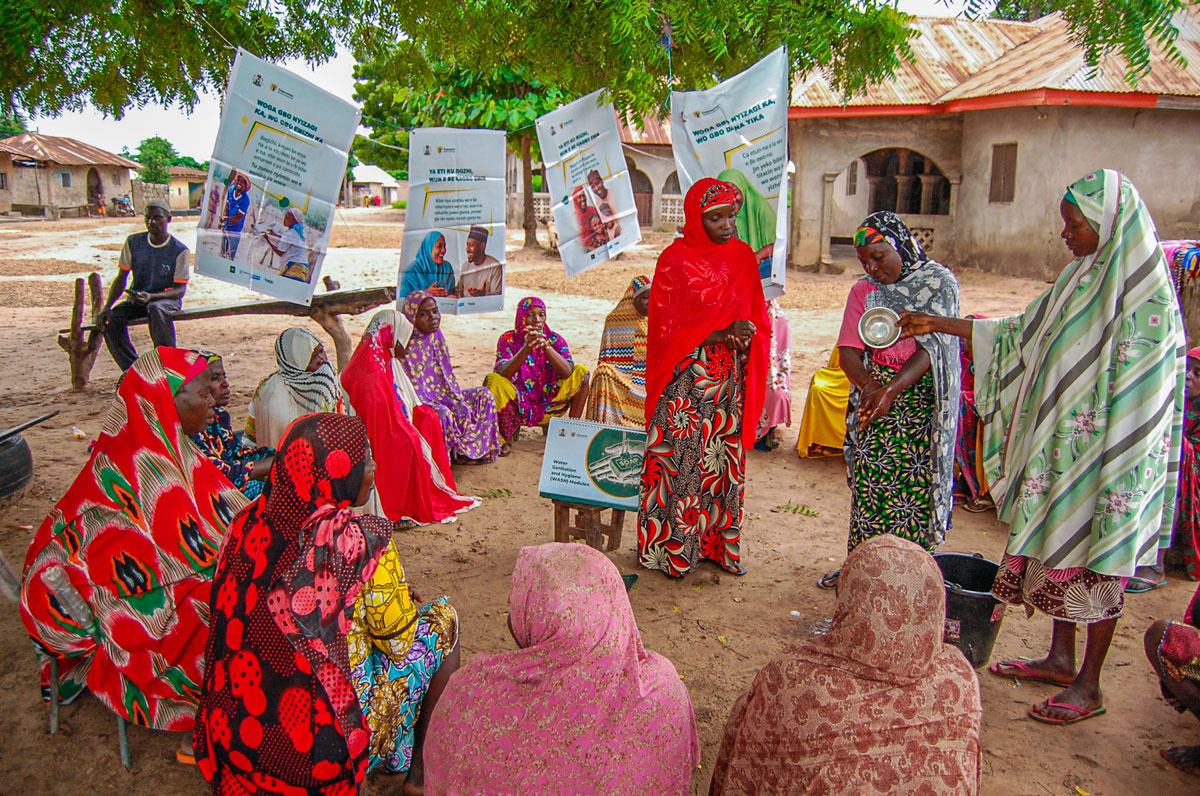
This layering means that a woman who joins a group to improve her livelihood can also gain knowledge that helps her navigate other challenges affecting her household and community. More importantly, the group provides an environment where women can discuss these issues collectively, challenge long-held beliefs and learn from one another.
The impact of this approach is particularly evident in conversations around gender and harmful social norms.
During one of the women’s group sessions in Abia State, a woman shared how her participation in the programme gave her the confidence to intervene when her daughter was trapped in an abusive marriage. Traditionally, pressure to remain in an abusive marriage, particularly for the sake of children, can make it difficult for families to intervene. But this mother chose differently.
“My daughter married a man who stopped her from working and beat her constantly… I refused to send her back. Today, she is safe and working as a teacher. This programme gave me the courage to take that stand.” – FGD Women Group, Abia State
The conversation also brought to the surface another deeply rooted challenge: women’s exclusion from inheritance and property ownership. Women described how cultural practices can deny them the right to inherit family property or land, leaving them particularly vulnerable in situations such as widowhood.
“Out of all these norms, the one that affects me the most in this our community is that no matter how rich your father is, you have no right to inherit his property, and you just watch others take it from you. As a woman, no matter how wealthy you are, no matter how wealthy your husband is, you cannot acquire a piece of land, and this is very painful.” – FGD Women Group, Abia State
These conversations are important because they demonstrate that empowerment is not only about providing women with economic opportunities. It is also about creating the confidence, knowledge and social support to question practices that limit their agency.
That is perhaps the greatest value of the community platform created by NFWP. A group that may have started around livelihoods can become a space where women learn about health, discuss Gender Based Violence (GBV), understand their rights, consider climate-related risks, improve household practices around Water, Sanitation and Hygiene (WASH) and collectively reflect on the norms that shape their lives.
In this way, the WAGs have become more than economic groups. They are communities of learning, support and social connection, spaces where information can become conversation, conversation can become reflection, and reflection can contribute to changes in attitudes and behaviour.
The experience of NFWP demonstrates that lasting empowerment does not happen through a single intervention. It is strengthened when women have structures that remain with them, grow with them and respond to the changing realities of their lives.
When women come together, learn together and find the confidence to act together, the impact can extend far beyond the individual. It can reach households, communities and, ultimately, the social norms that shape opportunities for generations to come.