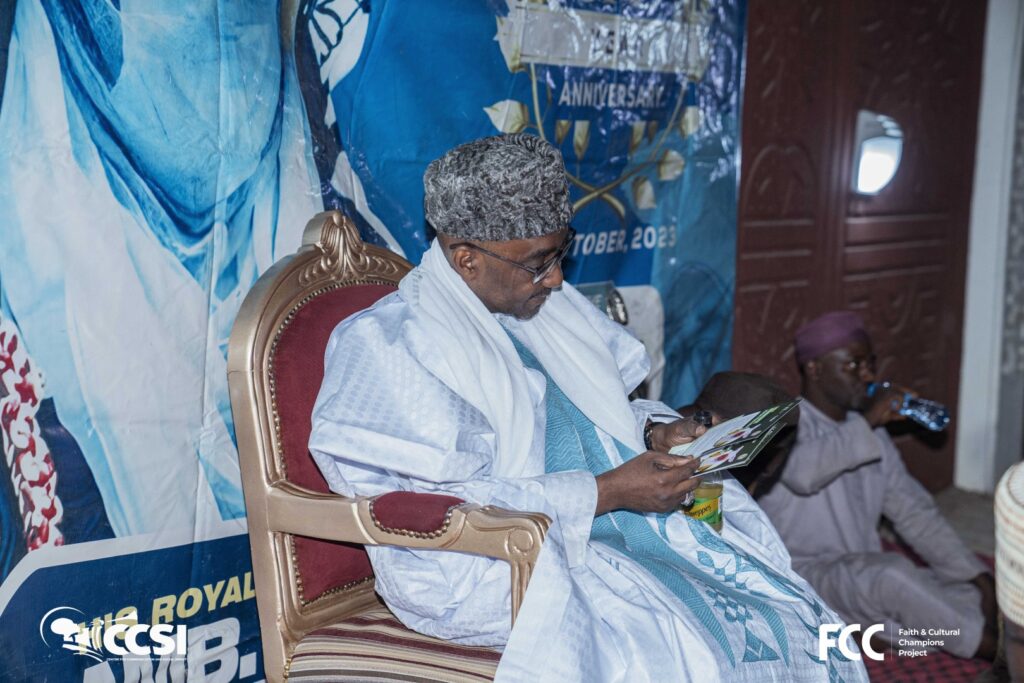
The Maghrib prayer had just ended in Zaria during the Ramadan when people started arriving at the Emir’s palace. They came in greeting one another, taking their seats. Plates were arranged, dates were shared, and the smell of food filled the air.
It was Iftar, but it was more than just breaking the fast. It was a moment where faith, culture, and everyday life were about to meet in a very real way.
At the centre was the Emir of Zazzau, His Royal Highness Ahmed Nuhu Bamalli, flanked by Zazzau Emirate Council members, traditional leaders from different domains under the Emirate Council and religious leaders from different faiths.
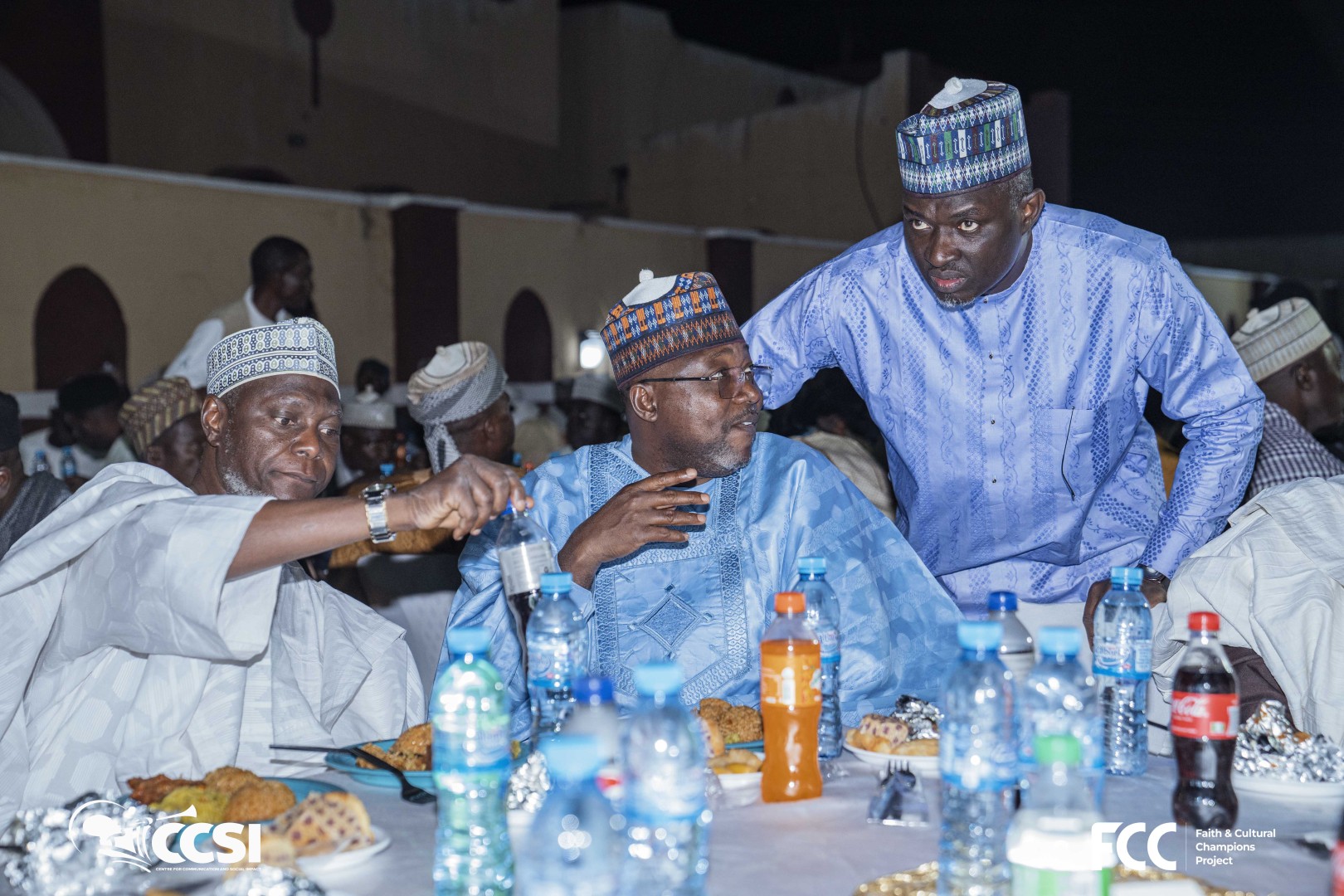
Iftar is more than just eating after a long day without food or drink. It carries deep spiritual meaning. It is a time of gratitude, where people reflect on their blessings. It is also a strong time for community and connection. It is about faith, togetherness, and care for others.
It was within this atmosphere that Prof. Muawiyyah Babale Sufiyan, Project Director of the Faith and Cultural Champions (FCC) project implemented by CCSI spoke. He used the opportunity given by the Emir to address an issue that affects many families across northern Nigeria, including in Zazzau Emirate, the health of mothers and children.
“In our research in Kano and Kaduna States,” he said, “we found that certain beliefs and practices are affecting the health of women and children. Over 40 percent of women attend health facilities during pregnancy, but many of them do not return to give birth there. This shows they understand antenatal care, but something is stopping them from delivering in health facilities. As a result, we still see many deaths caused by complications during childbirth.”
Prof. Sufyan further explained that the FCC project works closely with religious and traditional leaders because of their strong influence on addressing some of these norms.
“We know people listen to you,” he added. “That is why we appreciate His Highness for this platform. The leaders here can help change these beliefs and practices.”
The place was quiet, but attentive. It was clear that the message was being taken seriously.
He went on to call on the leaders to support the effort by raising awareness and educating their communities about harmful norms that affect pregnant women and children. “I also hope the Emir will continue to speak on these issues so we can reduce the number of deaths from mothers and children under five years of age.”
Then Mallam Tahir Baba, an AFCC, spoke, bringing in a religious perspective. He reminded everyone that in Islam, life is sacred and must be protected. He also addressed a sensitive issue. That some harmful practices continue because they are wrongly linked to religion. “We know that Islam provides guidance for every part of life,” he said. “And it is the role of religious leaders to help people understand this correctly. We must work together to address these norms.”
He called on both traditional and religious leaders to do more, especially in encouraging men to take responsibility for the wellbeing of their family. “We are seeking the support of His Royal Highness and all leaders here to help draw attention to this responsibility,” he added.
There was a quiet understanding that settled across the room. Not loud or dramatic, just there, and lasting. Because moments like this don’t end when the gathering disperses. They travel. In conversations after prayers. In advice given to a daughter, a wife, and a neighbour. In small decisions that, over time, begin to reshape norms. And that is how change really happens here. Not in grand declarations, but in rooms like this. After a shared meal. In the presence of trust. Where faith and culture are not barriers, but bridges. That night in Zazzau, advocacy did not feel like a campaign.
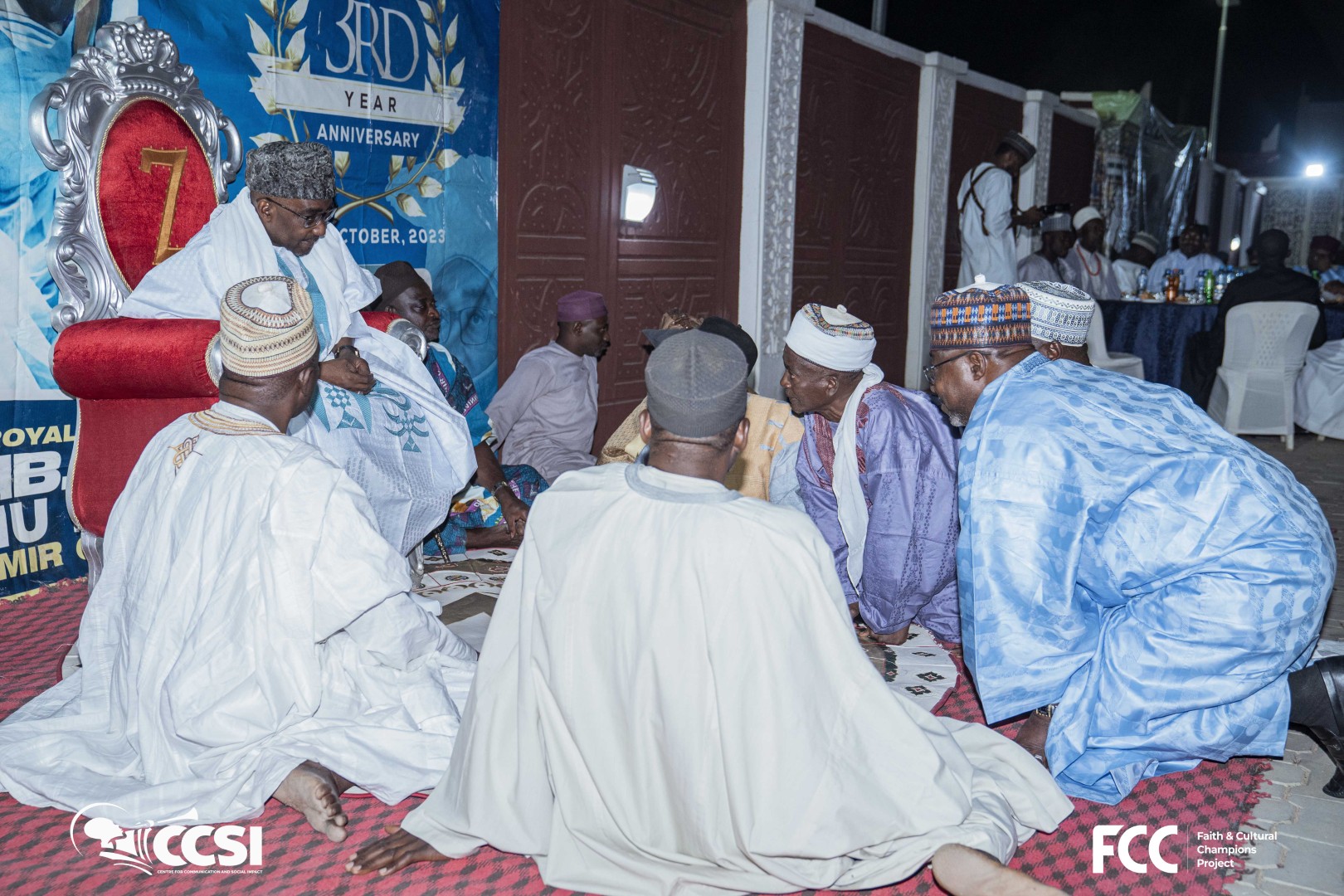
It was a proud moment for the FCC project, as we have been implementing activities in the communities towards shifting harmful norms and practices, we are also taking the message to high places, in places such as the Emir of Zazzau’s, at important gatherings such as this iftar. The FCC project has long been engaging with emirates and chiefdoms in Kano and Kaduna States. Specifically, in April 2025, the FCC project team paid a visit to the Emir of Zazzau, where the project was introduced. The Emir acknowledged challenges such as poor maternal and child health uptakes that the project seeks to address and pledge his commitment to supporting the project to achieve success. Since then, His Royal Highness has been a pillar of support to the FCC project, opening doors to districts and communities by directing district heads and community leaders under his domain to collaborate with the project towards improving health and wellbeing of adolescent girls and young women.
The FCC project appreciates His Royal Highness for hosting us and providing the platform for discussions on deep rooted cultural practices that affect maternal and child health to hold. As we continue implementing community activities, the FCC project remains committed to continue collaborating with our esteemed traditional institutions towards improving the health and social status of adolescent girls and young women in Kano and Kaduna states.