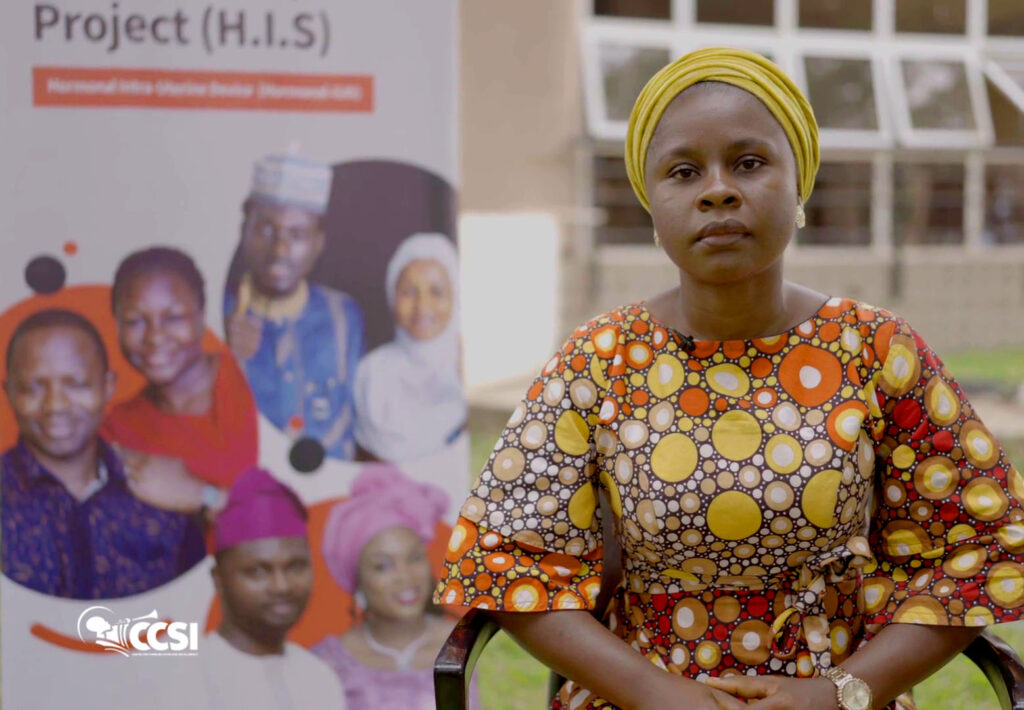
In many Nigerian communities, family planning is still weighed down by fear—fear fuelled by myths, half-truths and whispered cautionary tales passed from one woman to another. Stories of infertility, excessive bleeding, weight gain or sudden failure of protection continue to shadow modern contraceptive methods, quietly limiting women’s choices and exposing families to unplanned pregnancies and preventable health risks.
For Mrs. Mimikom Thabo, a mother of three from Zarazon Ward in Jos East Local Government Area of Plateau State, these fears were not abstract. They were lived realities.
Like many women, Mrs. Thabo wanted control over her reproductive health, but her experience with available options left her physically exhausted and emotionally disillusioned. The implant, which promised convenience, delivered months of irregular bleeding, persistent pain, dizziness and mood swings. “It affected me as a wife and as a mother,” she recalls. “I was not myself.”
Hoping for relief, she turned to oral contraceptive pills. But life intervened. A missed dose resulted in an unplanned pregnancy and the birth of her third child. By then, she had almost resigned herself to a familiar conclusion shared by many women around her: that every family planning method came at a personal cost too heavy to bear.
Her turning point came not in a clinic, but over the airwaves.
Mrs. Thabo first heard about the Hormonal Intrauterine Device (IUD) during a radio programme supported by the Centre for Communication and Social Impact (CCSI)’s Hormonal IUD Introduction and Scale Up (HIS) project. What followed soon after proved decisive. A community volunteer visited her neighbourhood, convening a small session with women to discuss modern family planning options—openly addressing fears, answering questions, and separating fact from fiction.
For the first time, Mrs. Thabo learnt that the Hormonal IUD is a small, flexible device placed in the uterus, releasing a low dose of hormone over several years. Unlike pills that require daily discipline or implants that had caused her distress, the Hormonal IUD not only prevents pregnancy for the long term but can also reduce heavy menstrual bleeding and cramps.
Still, scepticism lingered.
“I had heard people say it could make you infertile or fall out without you knowing,” she says. Determined to be sure, she visited the Primary Healthcare Centre in Zarazon, where trained nurses provided detailed counselling on the safety, effectiveness and reversibility of the method.
That encounter changed everything.
“After the lectures, I understood it was safe,” she explains. “I decided to try it—and it has worked perfectly for me.”
Since adopting the Hormonal IUD, Mrs. Thabo says her life has regained a balance she thought was lost. She reports no side effects. Her energy has returned. Her relationship with her husband has improved. Her children now enjoy a more present, playful mother.
“My husband is very happy because I no longer give him the cold shoulder,” she says with a smile. “My children are happy because I have time to play with them and help with their schoolwork. Even my body has gone back to the old me I used to know.”
But her story does not end at personal relief.
Mrs. Thabo has become an informal advocate, encouraging other women who feel trapped by unsuitable contraceptive options to seek accurate information. “Many women are stranded with methods that don’t work well for them,” she says. “This project has helped a lot of women. I want to see more campaigns so women can know the Hormonal IUD is safe, effective, and allows you to live your normal life without worry.”
Her experience mirrors the broader ambition of the HIS project, which combines mass media, social media and grassroots engagement to dismantle myths, build trust and expand access to modern family planning services. By equipping community volunteers and health workers with accurate information and referral pathways, the project is restoring confidence—one conversation, one clinic visit, one woman at a time.
For Mrs. Mimikom Thabo, the Hormonal IUD delivered more than contraception. It brought peace of mind, renewed family harmony and a sense of agency over her own body. For her community, her testimony is quietly reshaping perceptions long shaped by fear.
And across Nigeria, stories like hers are reminding us of a simple but powerful truth: when women are trusted with accurate information and supported by responsive health systems, myths lose their grip—and lives begin to change. One story at a time, the HIS project is showing how access to accurate information and supportive services can transform lives and households across Nigeria.