Long before hashtags and headlines, Nigerians learned who they were through stories. For a generation, Tales by Moonlight was not merely a television programme; it was a communal rite. Families gathered around flickering screens on the old NTA to listen, to imagine, and to absorb values that outlived the night. Storytelling was our first civic education.
That inheritance never disappeared. It simply evolved.
Across newsrooms, blogs, podcasts and digital platforms, Nigerians continue to tell stories that interrogate power, illuminate inequality and celebrate resilience. Many of these storytellers did not pass through the formal gates of journalism schools; they arrived by instinct, by conviction, by an unyielding desire to make sense of society. Yet paradoxically, at the very moment when stories matter most, the storytellers themselves are increasingly under strain—undervalued, underfunded, and constrained by structural barriers that blunt the impact of public-interest journalism.
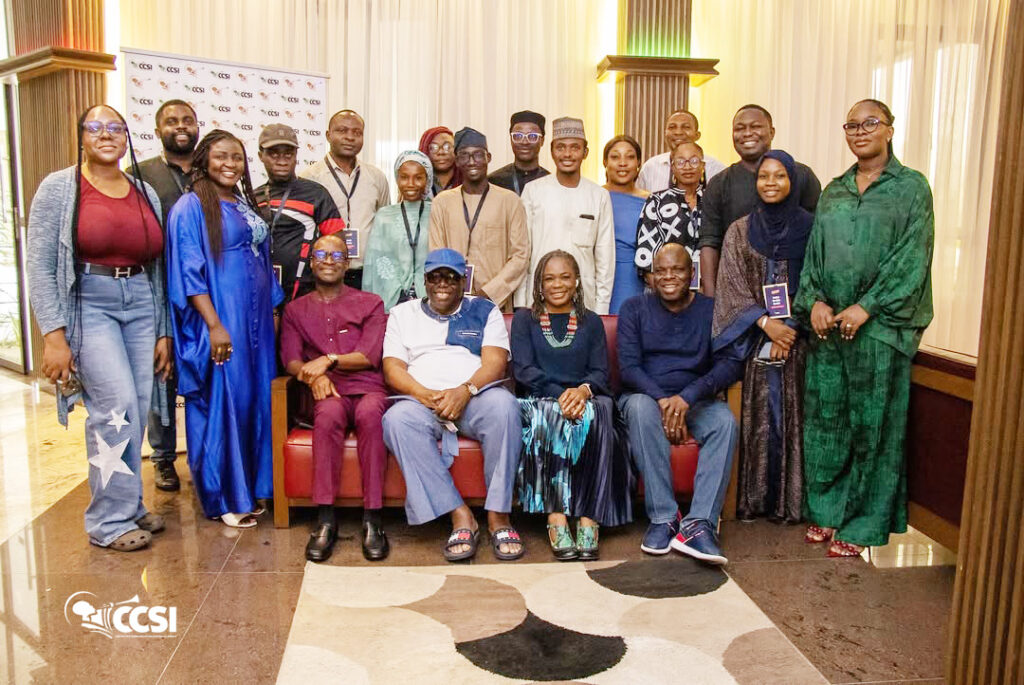
It was in response to this quiet crisis that the Storytellers for Impact Endowment Fund was conceived: a deliberate investment in Nigerian journalists and media professionals committed to human-centred, data-driven storytelling on development issues that too often fall below the radar. Its mission is simple but radical—to restore dignity to developmental journalism, amplify underreported voices, and ensure that stories do not merely inform, but provoke action and policy change.
One of the most compelling beneficiaries of the Fund is Charles Edosomwan, a storyteller whose professional journey defies neat labels. Trained as a computer engineer and digital marketer, with additional certifications in Public Relations, Crisis Management, and Digital Media from institutions in London and Dublin, Charles embodies a new generation of hybrid storytellers—technically skilled, socially conscious, and deeply rooted in lived realities.
Through his project, The Women Building Wealth with Just a Phone, Charles turned his gaze to Nigeria’s vast informal economy, where women—market traders, tailors, food vendors—are quietly redefining what financial inclusion means in practice. Without fanfare and often without formal bank accounts, they are saving, borrowing, trading and scaling businesses using nothing more than mobile phones.
What Charles revealed was not merely resilience, but revelation: Digital Public Infrastructure (DPI) is not an abstract policy slogan. For these women, it is survival, opportunity, and dignity.
Through short documentaries, podcasts and written features, he documented how women navigate connectivity failures, literacy gaps and platform breakdowns with ingenuity and grit. His work posed uncomfortable but necessary questions: Are Nigeria’s digital systems genuinely inclusive, or do they merely expand statistics without touching lives? Are women and low-income earners empowered participants, or peripheral beneficiaries?
With support from the Storytellers for Impact Endowment Fund, Charles and his team deepened this inquiry. From festivals to food joints, they traced how access, understanding and infrastructure shape outcomes. At the Ojude Oba Festival in Ijebu-Ode, they observed women recording sales increases of over 500 per cent through digital payments—even as POS failures spiked by 40 per cent. In Lagos, a food business, Amoke Oge, reportedly crossed the ₦1 billion mark on Chowdeck. The contrast was stark, but the lesson sharper: inclusion is not accidental; it is designed.
Their reporting uncovered evidence that targeted account drives, women-focused agent networks and tailored savings products are working—but remain insufficiently scaled. More importantly, Charles recognised that these stories themselves were catalysts. When told well, they inspire adoption, demand reform and reframe what is possible.
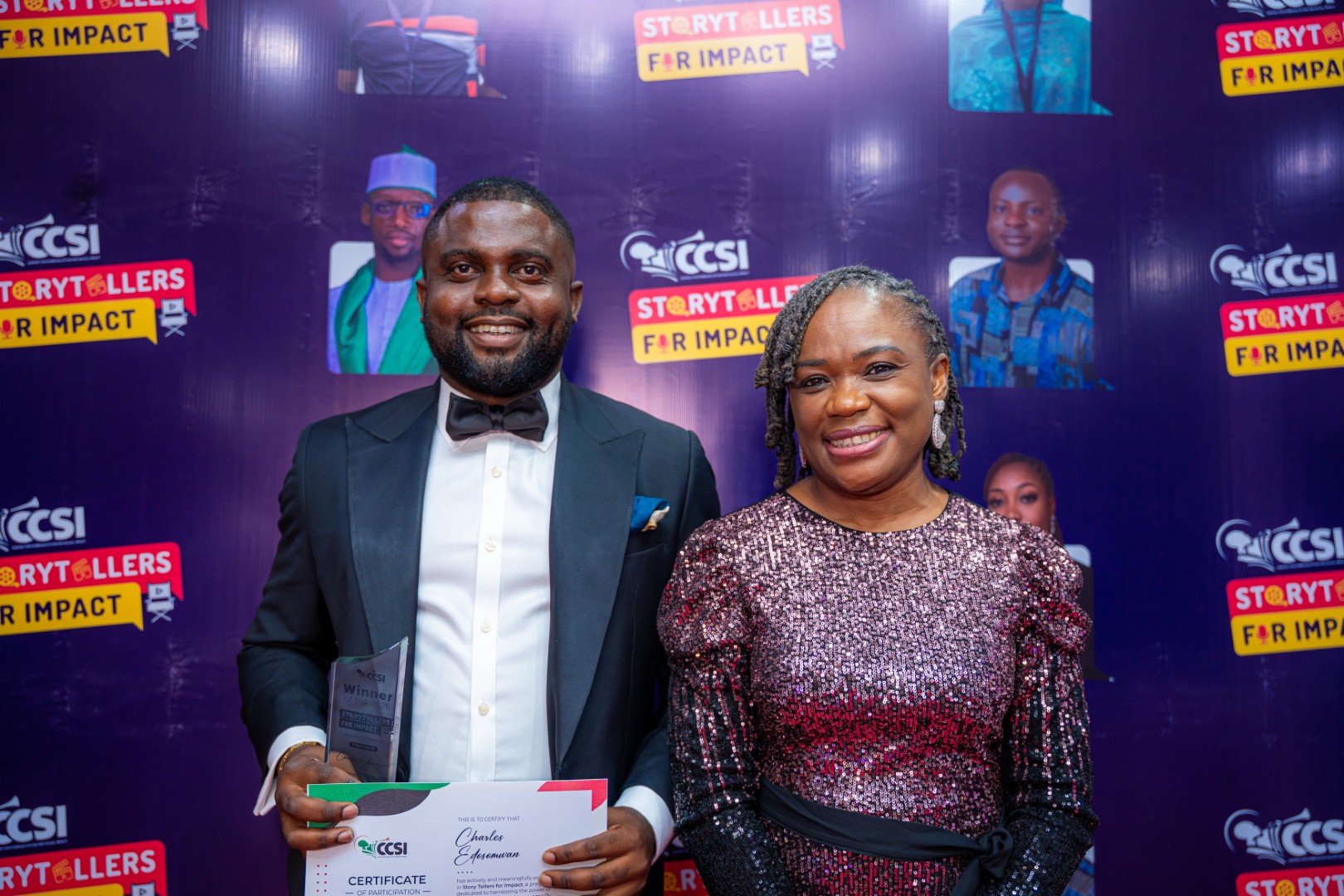
For this body of work, Charles Edosomwan was named Winner of the Storytellers for Impact Award—recognition not just of craft, but of consequence. Today, he continues to build partnerships, pushing for a Nigeria where rural women are not digital afterthoughts but digital champions.
His journey underscores a larger truth. Stories are not ornaments of development; they are its engines. They humanise data, expose gaps between policy and practice, and give voice to those too often spoken about, but rarely heard.
This is the animating spirit of the Storytellers for Impact Endowment Fund: removing barriers so that storytellers can do what they do best—amplify voices, shift narratives, and challenge systems. Because when storytellers are supported, stories do more than circulate. They compel. They endure. And, sometimes, they change the course of a nation.