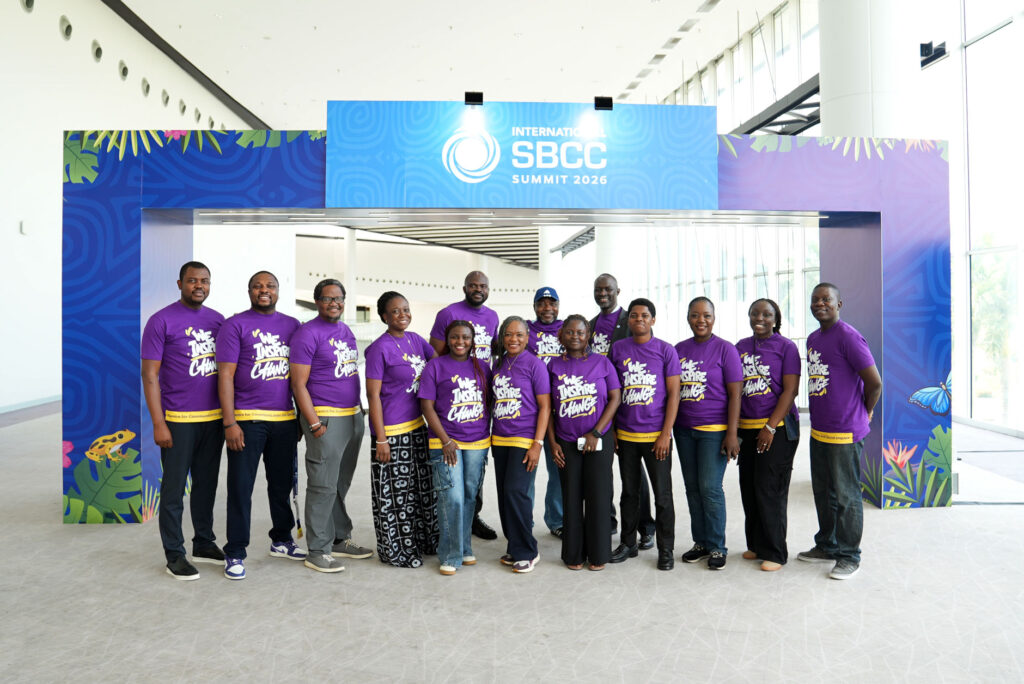
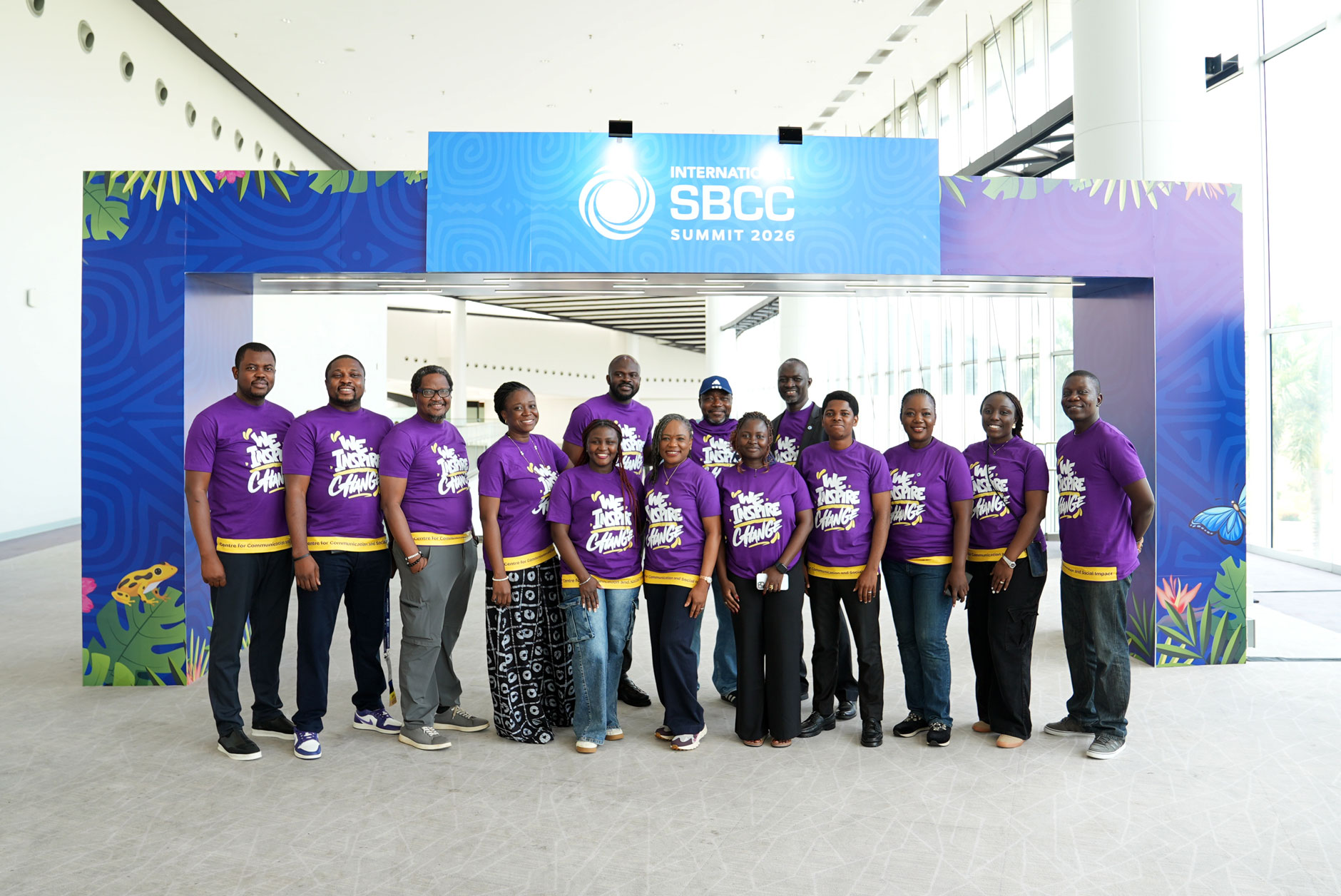
Some conferences are about presentations, others are about connecting people. The 2026 Social and Behaviour Change Communication (SBCC) Summit in Panama was about both.
Co-chaired by the Johns Hopkins University Center for Communication Programs (CCP) and the Centre for Communication and Social Impact (CCSI), the 2026 SBCC Summit was more than a conference. It was a vibrant global gathering of ideas, cultures, and changemakers. More than 800 practitioners, researchers, policymakers, advocates, and innovators representing 125 countries converged to exchange experiences, challenge conventional thinking, and co-create solutions to some of the world’s most pressing development challenges.
United by the theme, “The Power of Connection: Reimagining Knowledge, Action and Equity in a Changing SBCC Landscape,” the Summit became a dynamic space where conversations sparked collaborations, diverse perspectives shaped new ideas, and connections made in the hallways proved just as valuable as those made on the stage.
The 2026 SBCC Summit opened with a powerful reminder that behind every successful intervention, campaign, and movement are the relationships that make change possible.
Welcoming delegates from across the world, CCSI Executive Director and Summit Co-Chair, Babafunke Fagbemi, captured the spirit of the week:
Real and lasting change depends on something deeper: relationships, trust, context, and our ability to understand and respond to people’s lived realities. That is why this Summit mattered. When we come together with purpose, humility, and a commitment to equity, our collective impact is far greater than the sum of our individual efforts.
It was a message that echoed throughout every plenary, breakout session, and conversation in the halls.
Asking the Big Questions
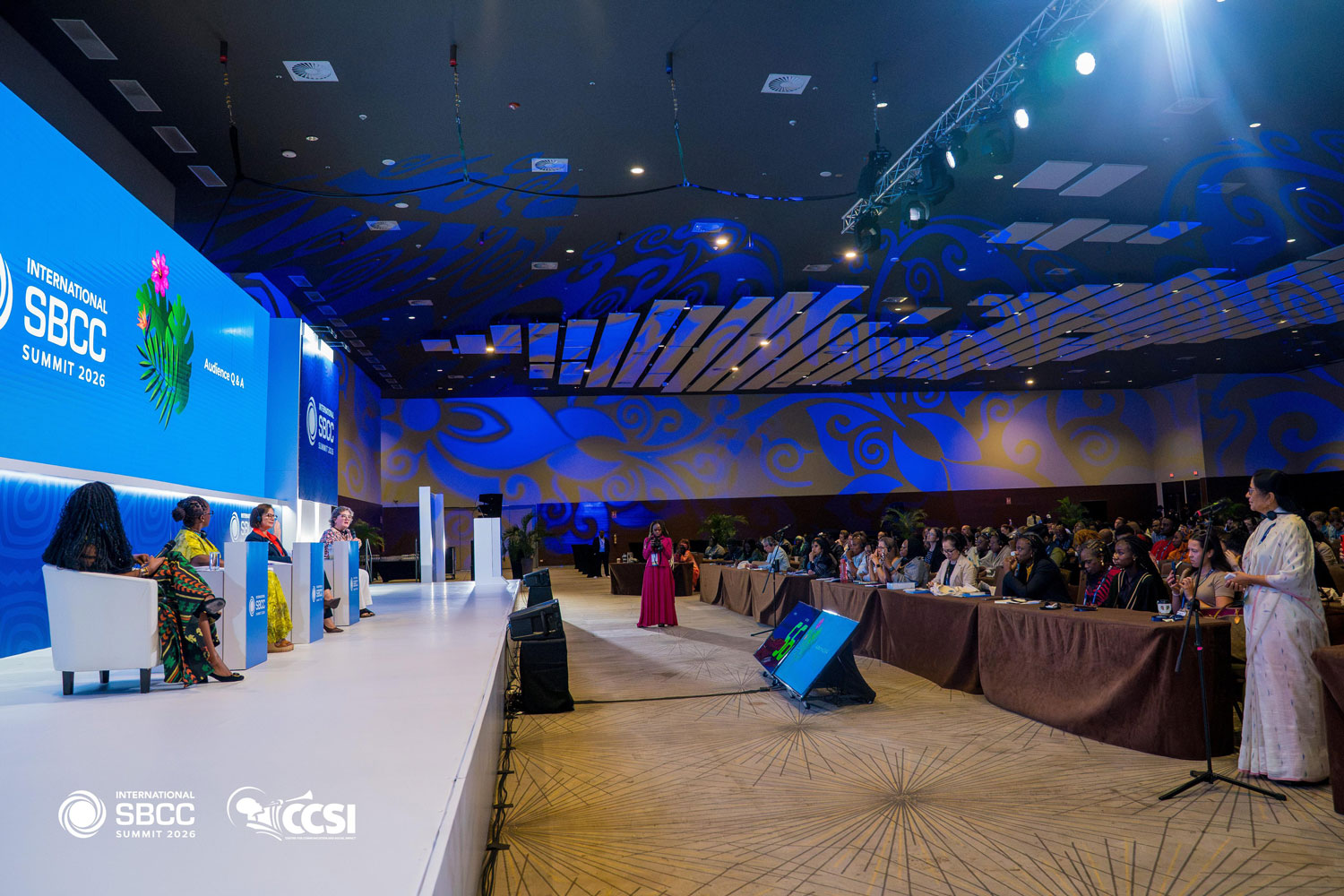
For one inspiring week, delegates gathered to ask one question: How do we create meaningful, lasting change in an increasingly complex world? It all began with one powerful reminder: communication is not one-size-fits-all.
The plenary sessions were exceptionally well attended, with a level of audience engagement that clearly reflected how strongly the selected topics resonated with a global audience. These sessions explored themes such as innovative local and ancestral approaches to addressing SBCC funding gaps, human rights and social justice, and the opportunities and challenges presented by AI.
They brought together an outstanding lineup of moderators—Lorenzo Vargas, Director of Programmes at WACC-Centre for Communication Rights; Olufunke Olufon, Founder and Principal Consultant at Iwa Consulting; Mimi Kalinda, Global Communications and Marketing expert; and Fatimah Abubakar Alkali, Strategic Communications and Public Affairs Leader—alongside a diverse group of seasoned subject matter experts from across the world, including representatives from indigenous communities such as the Emberá-Wounaan communities in Panamá living in and around Darien National Park, declared a Natural World Heritage site by UNESCO.
Day 1: Communities as Storytellers
The opening plenary, moderated by Lorenzo Vargas, featured Prof. Adebayo Fayoyin, Board Chair of the Africa Society for Social and Behaviour Change; Omayra Casamá, an Emberá leader, educator, and advocate; Soraya Bayuelo Castellar, Founder and General Coordinator of the Montes de María Line 21 Collective Communications Corporation; Gideon Too, Vice President for Research, Advisory and Practice at Busara; and Yutsu Maiche, a communicator, documentary filmmaker, and musician from the Ecuadorian Amazon.
Together they set the tone for the summit by challenging participants to rethink communication as a catalyst for sustainable, community-led change rather than simply a tool for information sharing. Drawing from experiences across Africa and Latin America, the speakers emphasized that effective social and behaviour change communication must be rooted in local realities, cultural identity, and the voices of the communities it seeks to serve.
Prof. Fayoyin aptly noted that, “communication has different local dimensions, and it cannot be characterized globally in the same way.” This was echoed by Yutsu Maiche who emphasized the importance of community ownership of narratives:
We are not waiting for outside media to tell our stories, we are creating our own communication from the territory, from the frontlines.
Throughout the opening day, speakers echoed a common theme: communities should not simply be audiences, they should be storytellers, partners, and co-creators.
Day 2: Navigating the Funding Landscape
As the global funding landscape for social and behaviour change communication continues to shift, the Day 2 plenary tackled one of the summit’s most pressing questions: How can SBCC remain impactful in the face of shrinking resources?
Moderated by Olufunke Olufon, the session brought together Norma Jean Straw (Gates Foundation), Nontokozo Madonsela (Momentum Metropolitan Holdings), and Martha Mérida (ProSalud, Bolivia). Rather than dwell on uncertainty, the panel challenged participants to see this moment as an opportunity to reimagine the future of the field through innovation, collaboration, and stronger institutions.
Norma Jean Straw reminded the audience, “We’re not at an end, we’re at a point in a transition, and let’s be part of creating an even better, more positive sector on the other side of this transition.” Bringing the discussion together, moderator Olufunke Olufon left participants with a challenge that resonated throughout the room: “A more sustainable future for SBC can only begin if we start rethinking how we fund it. We’re being asked to shift from constraints to innovation, to resilience, to shared investment. And that shift is not theoretical, it’s happening.”
Day 3: Human Rights and Social Justice
Against a backdrop of growing global challenges to human rights and social justice, the Day 3 plenary explored how communication can inspire collective action, build trust, and strengthen movements for change. Moderated by Mimi Kalinda, the session featured Dr. Orlando Francisco Quintero Arosemena (Probidsida), Priyanka Kher (Breakthrough India), and Silvio Waisbord (George Washington University).
Setting the tone, Mimi Kalinda reminded the audience that “People buy into people before they buy into concepts, ideas, and ideologies.” Together, the panel highlighted that advancing human rights and social justice requires more than compelling messages. It demands trust, solidarity, and communication that brings people together around a shared vision for change.
Day 4: AI and the Future of Development
As artificial intelligence continues to reshape nearly every aspect of society, the Day 4 plenary turned its attention to a crucial question: How can SBCC harness AI responsibly while keeping people at the centre of change?
Moderated by Fatimah Abubakar Alkali, the discussion featured Oluseun Onigbinde (BudgIT), Dino Rech (Audere-Equitable Care Worldwide), and Anneka Wickramanayake (Jacaranda Health). Oluseun Onigbinde noted that technology should complement, not replace, human ingenuity, stating, “AI is a support system for humans. The human mind remains the engine of civilization; our imagination, judgment, and creativity are what AI cannot replace.”
Concluding the session, Fatimah Abubakar Alkali inspired participants, saying, “When AI is employed and guided by the right hands, it becomes one of the most powerful tools for social and behavior change. Those right hands are in this room.”
On the Global Stage
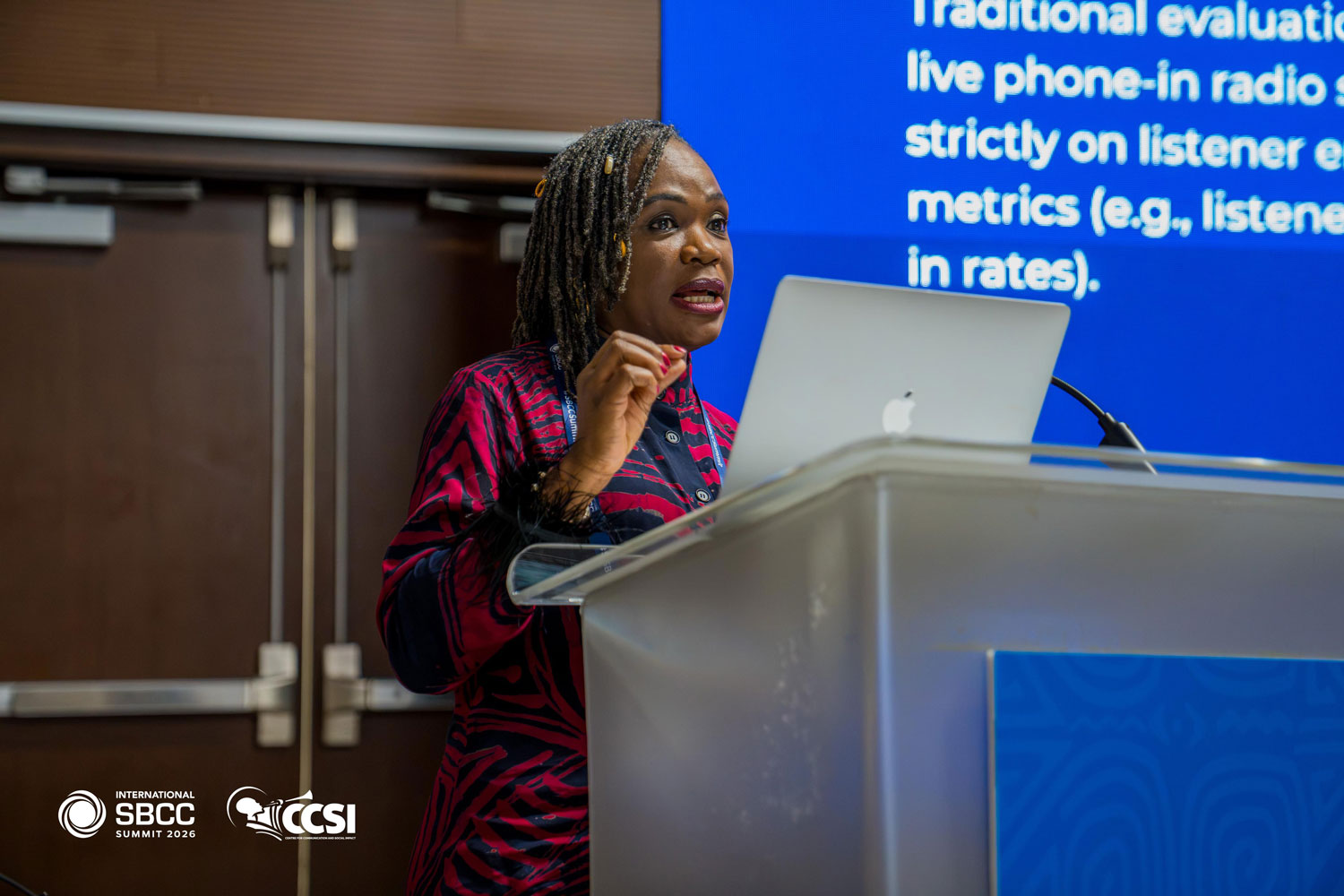
For CCSI, it was a week of visibility, contribution, and recognition. As co-chair, CCSI helped shape one of the world’s most important gatherings on social and behaviour change. As presenters, moderators, and participants, its team contributed evidence, practical insights, and fresh thinking to global conversations. And alongside fellow Nigerian delegates, CCSI demonstrated that Nigeria is not simply participating in global dialogue—it is helping lead it.
Beyond the plenaries, CCSI’s breakout sessions brought the summit theme to life:
- PEBIC Evaluation Criteria: CCSI Executive Director Babafunke Fagbemi introduced this innovative framework developed to assess the quality of responses provided by radio programme resource persons, offering broadcasters a practical tool for strengthening media engagement.
- The Power of Trust: Professor Muawiyyah Babale Sufiyan explored how trust can be measured and strengthened as a critical driver of health outcomes.
- Immersive Nutrition Education: CCSI Programme Officer Chayil Onazi showcased how interactive activities can encourage healthier food choices through active participation rather than passive instruction.
- Rethinking Research: Director of Strategy Adenike Ayodele challenged conventional approaches to research, emphasizing that meaningful insights come from listening closely to communities and valuing lived experiences.
- Faith and Cultural Partnerships: Programmes Manager Bako Kantiok highlighted CCSI’s work with faith and cultural leaders, showcasing how trusted community voices can drive meaningful social change.
- Citizen Co-creation: CCSI Programme Officer Ayomide Ladipo presented on using participatory communication to advance transparency and combat misinformation, drawing on lessons from the PAC4PHC project.
Although each session tackled a different challenge, they were united by a common thread: the most effective interventions begin by listening, are strengthened by evidence, and succeed when they are rooted in the everyday realities of the people they serve.
Insights from Delegates: Five Days That Stayed with Everyone
As delegates reflected on their experience, a few powerful lessons surfaced again and again:
Trust communities.
The people living the challenges are not just beneficiaries of change; they are its architects. The most effective solutions emerge when communities are trusted to lead, innovate, and shape the decisions that affect their lives.
See disruption as an opportunity.
Whether the conversation centred on funding shifts, artificial intelligence, or an increasingly complex information landscape, change is inevitable, but so is the opportunity to rethink old approaches and build stronger partnerships.
Keep people and context at the centre.
Data matters. Evidence matters. But neither can stand alone. Lasting social and behaviour change happens when communication reflects culture, listens deeply, respects lived experiences, and responds to the realities people face every day.
Tell stories that people can see themselves in.
From Indigenous storytellers to health practitioners, the summit celebrated the power of authentic storytelling. The stories that move people are the ones rooted in truth, shaped by experience, and told by those who live them.
A Celebration of Panama’s Spirit
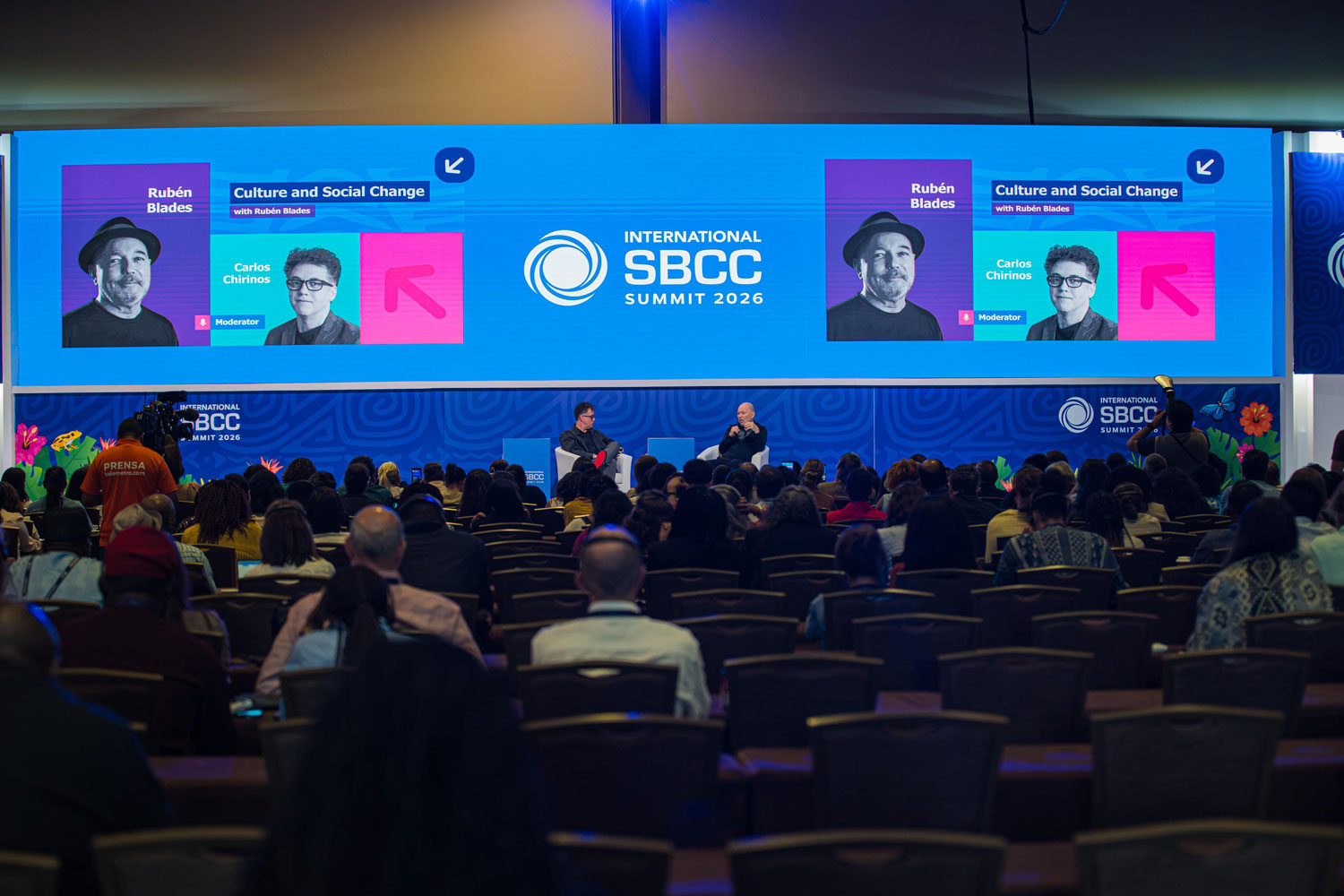
The experience was beautifully rounded off with an evening of relaxation and deep reflection at the Culture and Social Change session, featuring the iconic Rubén Blades—Grammy-winning musician, actor, and former Minister of Tourism of Panama. Moderated by Prof. Carlos Chirinos, Rubén reflected on the power of entertainment as a force for social change, observing that “songs have impact on education, norms and values.” This principle has long been at the heart of CCSI’s work, integrating entertainment into behaviour change strategies to educate and inspire.
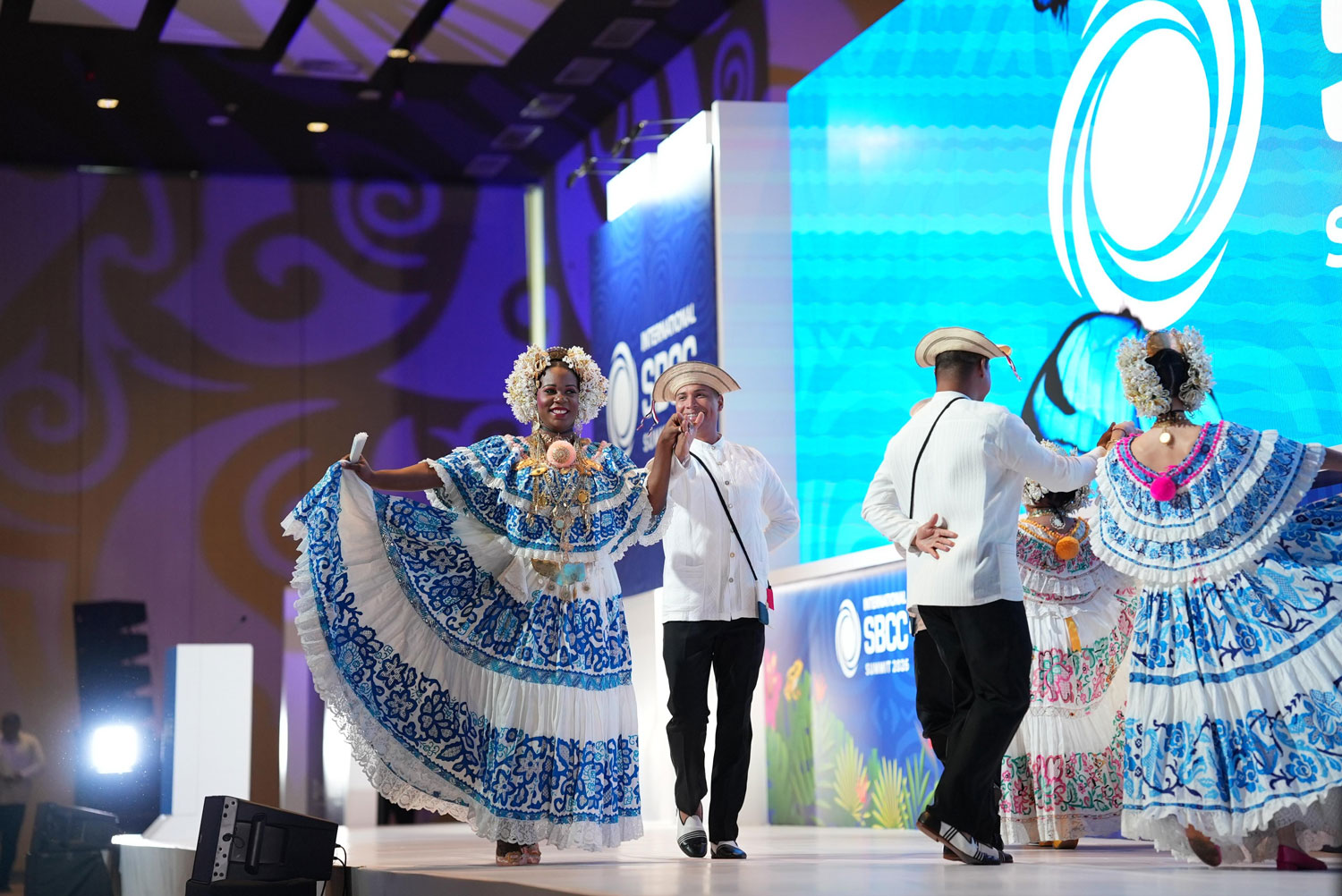
There was no better way to close the summit than with music, movement, and celebration. Delegates stepped onto the dance floor alongside Panama’s vibrant folkloric dancers. What began as a performance quickly became a joyful celebration, with laughter, applause, and dance reminding everyone that communication, culture, and human connection transcend language.
As delegates packed their bags and said their goodbyes, they carried home more than new contacts and fresh ideas. They carried a renewed sense of purpose and the conviction that the future of social and behaviour change will be shaped by a connected global community willing to learn from one another and act together.
The 2026 SBCC Summit celebrated The Power of Connection, and our partnerships embodied exactly that. To every organization that collaborated with CCSI, thank you for proving that when expertise, trust, and purpose come together, remarkable things happen. We are proud of what we achieved together and even more excited about what lies ahead.