The Melbourne Framework: Seven Pillars for the New Frontline of Adolescent Health
There is a specific, heavy kind of silence that exists when a development intervention fails to land. At the Centre for Communications and Social Impact (CCSI), we stood in that silence. We shared the story of that quiet, empty room with a standing-room-only audience at the Women Deliver 2026 Conference in Narrm (Melbourne), not to showcase failure, but to demonstrate a lesson that has shaped our approach to social and behaviour change.
When the CCSI delegation stepped into the Melbourne Convention and Exhibition Centre (MCEC), the mission was clear: to connect local realities with global conversations and to emphasize that sustainable behaviour change cannot happen when communities are excluded from designing the solutions that affect them.
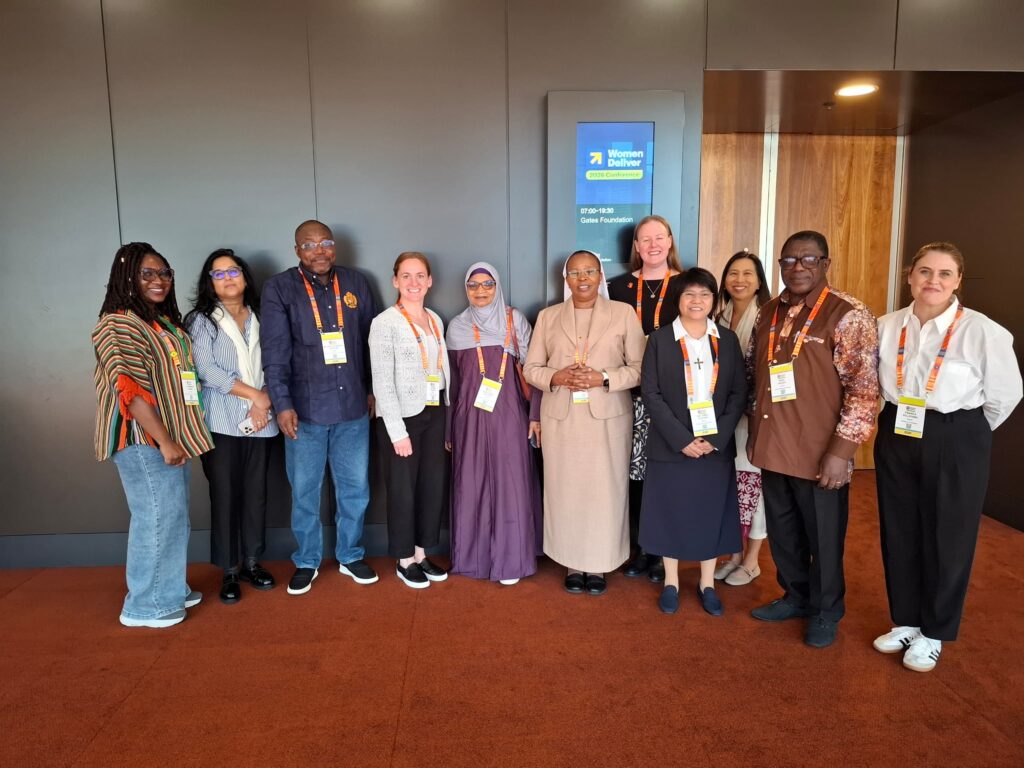
That message came to life during CCSI’s featured showcase, Voices of Change: Faith Leaders on the Frontlines of Adolescent Health and Wellbeing, in partnership with the Gates Foundation and the Minderoo Foundation, in line with the 2026 conference theme: “Change calls us here: to gather, to strategize, and to shift power. The room was filled with faith leaders, development practitioners, researchers, and global partners, all gathered to explore how trusted community voices can influence positive behaviours, challenge harmful social norms, and improve health outcomes for adolescents and young people.
The Narrative of the Empty Room
We took delegates away from the polished halls of the MCEC and into a rural community in northern Nigeria, where one of our interventions was met with an empty room. There were no participants. The chairs remained vacant. Community resistance was strong, fueled by deep concerns about external influence and longstanding social norms. In that moment, there were several options: push harder, amplify the messaging, or withdraw entirely. Instead, CCSI chose a different path: The Methodology of Patience, one rooted in trust and listening.
The team tasked with this mission was composed of women of the Islamic faith, experts who shared the same cultural and religious identity as the community they sought to engage. This was the “Power of the Mirror.” Because they were not viewed as outsiders but as daughters and sisters of the same faith, they possessed the cultural legitimacy to sit in that silence.
Because of that shared identity, they were able to stay in the silence. Rather than forcing participation, they engaged community gatekeepers through respectful conversations, taking time to understand concerns and build relationships. They worked within the community’s cultural fabric rather than against it. Gradually, the room began to change. The same traditional leaders and community members who had initially resisted the intervention became some of its strongest advocates. They encouraged participation, protected the process, and requested continued engagement.
As we shared with delegates in Melbourne: “Change doesn’t come from pushing harder, but from quiet, deep conversation and truly listening.””
The Science of Trust: Mapping the Reach Gap
The story of the empty room resonated because it reflected a broader reality: trust is not a soft concept. It is an essential ingredient for effective social and behaviour change. During the showcase, Neetu from Fraym presented geospatial mapping data that highlighted what she described as a “reach gap” in adolescent engagement. Her data proved definitively that faith networks reach adolescents earlier, more consistently, and with higher levels of psychological safety than any formal state health facility or secular outreach program.
For CCSI, the findings from merging this geospatial science with the unmatched moral authority held by faith leaders demonstrated a new “Evidence Convergence Model.” Through lessons from field experience, we proved that faith is not a barrier to be bypassed; it is the most resilient “last-mile” infrastructure currently available on the global market. When community trust, local leadership, and evidence come together, programmes are better positioned to achieve meaningful and lasting change.
Together with partners from different countries and contexts, we reflected on what drives successful social and behaviour change. Yet, it was the raw reality of our Nigerian framework, led by women of faith engaging patiently with a resistant community that left the room in thoughtful silence. It was a reminder that lasting change often begins when communities are trusted to lead.
The Seven Pillars of the Melbourne Framework
The conversations in Melbourne moved beyond identifying challenges to examining what meaningful partnership should look like in practice. From those discussions emerged Seven Pillars of Partnership, setting the core standards for how the world must engage moving forward, that underpin what is now referred to as the
Melbourne Framework:
-
- Deep Mutual Trust: A permanent move away from paternalistic “policing” models toward a shared, equitable vision.
- Co-Design from Inception: Local leaders and communities must be the primary architects of the intervention, not just the executors.
- Respect for Local Values: Intentionally working within existing cultural and contextual frameworks rather than fighting them.
- Absolute Transparency: Bi-directional clarity regarding funding mechanics, resource allocation, and overriding objectives.
- Inclusivity & Acceptance: Valuing socio-demographic diversity as a strategic opportunity and a core asset.
- Mutual Accountability: Holding donors, international agencies, and local implementers to the same high standards.
- Long-Term, Flexible Financial Resources:Eradicating the volatile, short-term project cycle in favor of sustainable, predictable financial infrastructure.
The Village and the Fire
The showcase concluded with a reflection from Sister Jane, a partner whose voice reminded the delegates that the global community fails structurally whenever it fails to nurture and listen to its youth. She shared two proverbs that now serve as the emotional and technical anchors for CCSI’s global 2026–2029 strategy:
“It takes a village to raise a child.”
“A child who is not embraced by the village will burn it down to feel its warmth.”
Those words echoed far beyond the session. They emphasized a central message that emerged throughout the conference: communities must be trusted, included, and empowered to shape the solutions that affect their lives.