Healthy childbirth spacing remains one of the most effective strategies for improving maternal and child health outcomes. However, misconceptions, cultural norms, and limited access to accurate information continue to hinder the uptake of childbirth-spacing services in many parts of Nigeria.
As part of ongoing efforts to promote healthy childbirth spacing and improve reproductive health outcomes, the Centre for Communications and Social Impact (CCSI) has commenced the Childbirth Spacing (CBS) component of the Faith and Cultural Champions (FCC) Project. The initiative seeks to increase the voluntary and informed uptake of childbirth-spacing services among married young women and couples in Kano and Kaduna States.
Launched in May 2026, the CBS component builds on the broader FCC Project by leveraging the influence of faith and cultural champions as key drivers of behaviour change and social norm transformation. Through existing faith-based and community-owned platforms, the initiative aims to foster positive attitudes toward childbirth spacing and strengthen community support for informed reproductive health decisions.
The 18-month intervention is designed to bridge the gap between prevailing social norms and health-seeking behaviours, creating an enabling environment for the acceptance and uptake of modern childbirth-spacing methods.
The FCC project, a three-year initiative, aims to create an enabling environment that improves the health, rights, and agency of married Adolescent Girls and Young Women (AGYW) across Northern Nigeria. Under the CBS component, the project will:
- Reframe childbirth spacing to ensure conceptual correspondence with religious and cultural value systems to enhance acceptability.
- Enhance FCC institutional leadership capacity to advocate for community education and normative shift on CBS on their platforms.
- Deploy tailored audience SBCC messages via mass media, community engagement and communication channels to reach AGYW, their husbands and reference groups.
- Institutionalize standard and technically vetted sermon guides designed for local sustainability.
- Establish a functional referral pathway and facility linkage from the community.
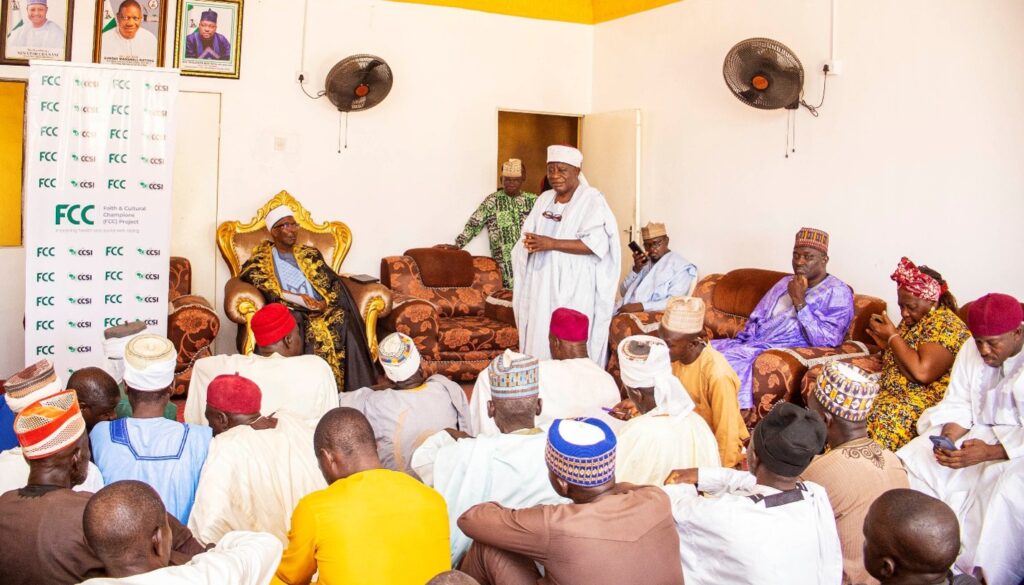
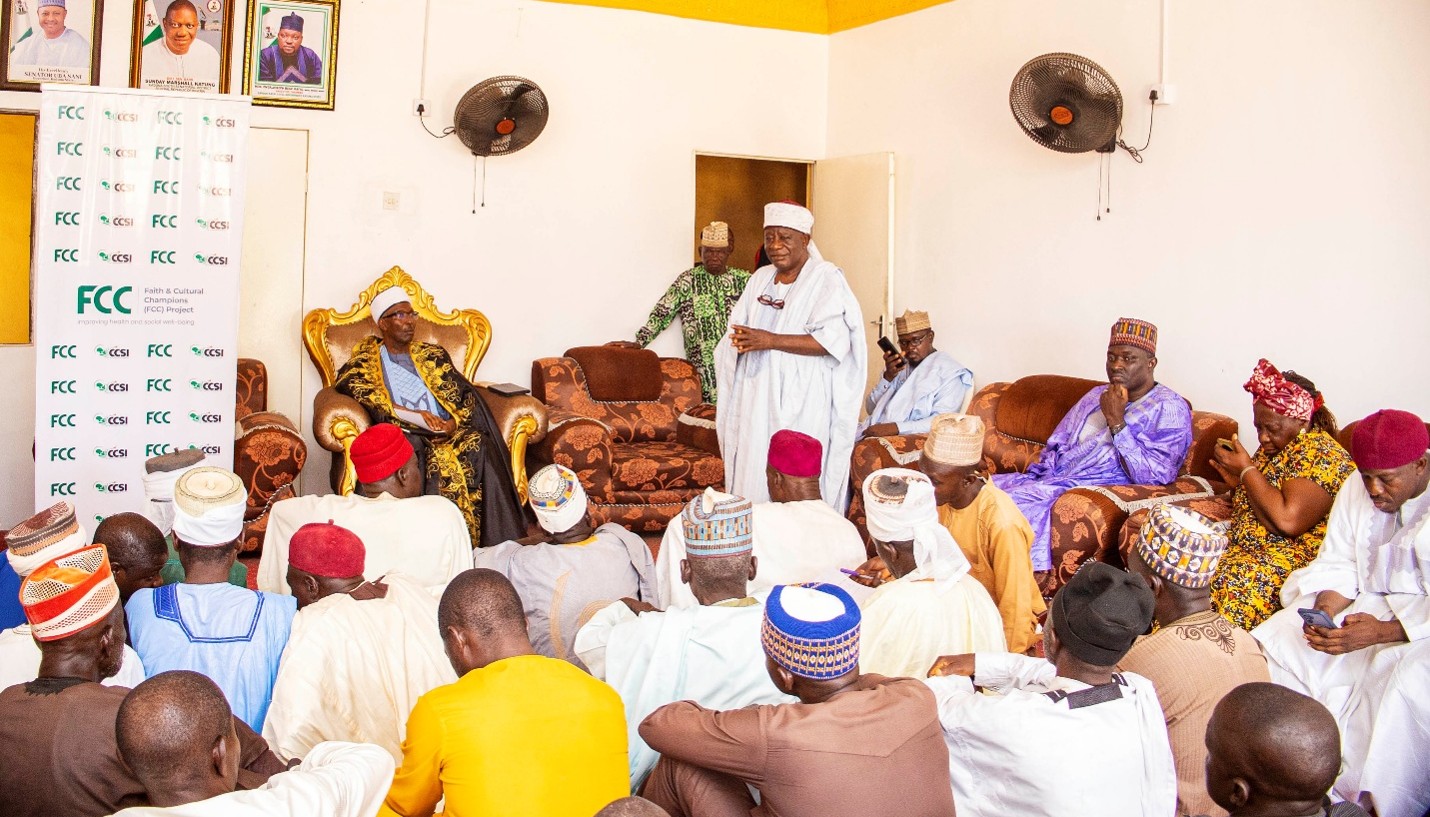
Beyond the messages themselves, what makes the CBS initiative distinct is who delivers them, – the Implementing Faith and Cultural Champions (IFCC). This cohort spans mosques, churches, Islamiyyah schools, and established community networks across Kano and Kaduna States. They are not outsiders brought in for the project; they are leaders the community already trusts. Imams who address Friday congregations. Pastors whose sermons fill halls. Women’s association leaders whose influence moves quietly but powerfully through neighbourhoods and households.
These IFFC cohorts have the reach among the project’s target groups, which are adolescent girls, young women, and young men. Because the IFCCs work through structures that already exist, the mosque, the church, the women’s group, and childbirth-spacing conversations do not compete for space. They fit into rhythms the community already follows, in the language, setting, and season that feel most natural to the audience.
Through this initiative, CCSI and its partners are strengthening the roles of faith and cultural leaders in advancing informed reproductive health choices and supporting healthier families and communities across Northern Nigeria.